1
Bride of Frankenstein Gown
with attached slip
Bride of Frankenstein Gown
with attached slip
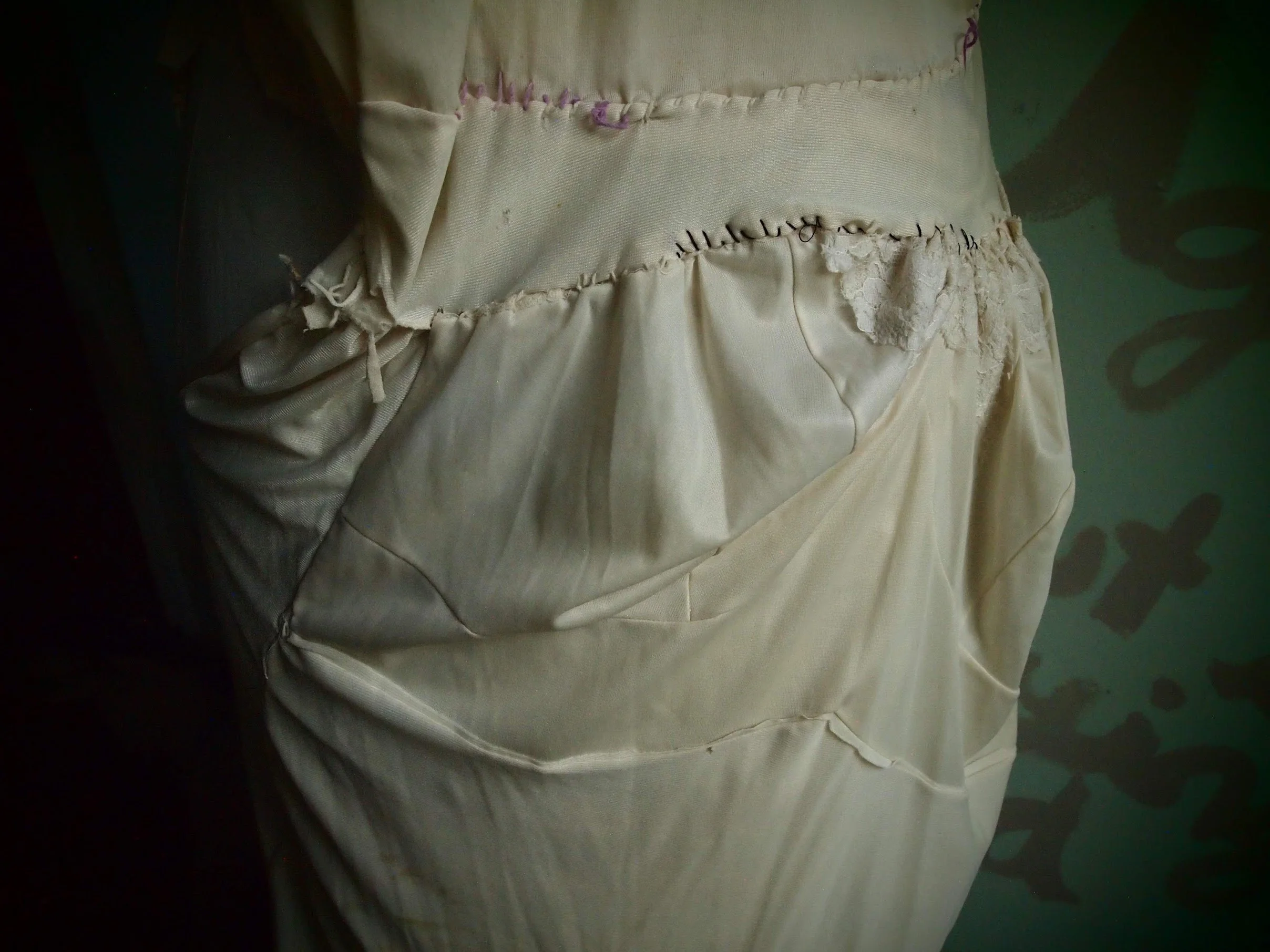
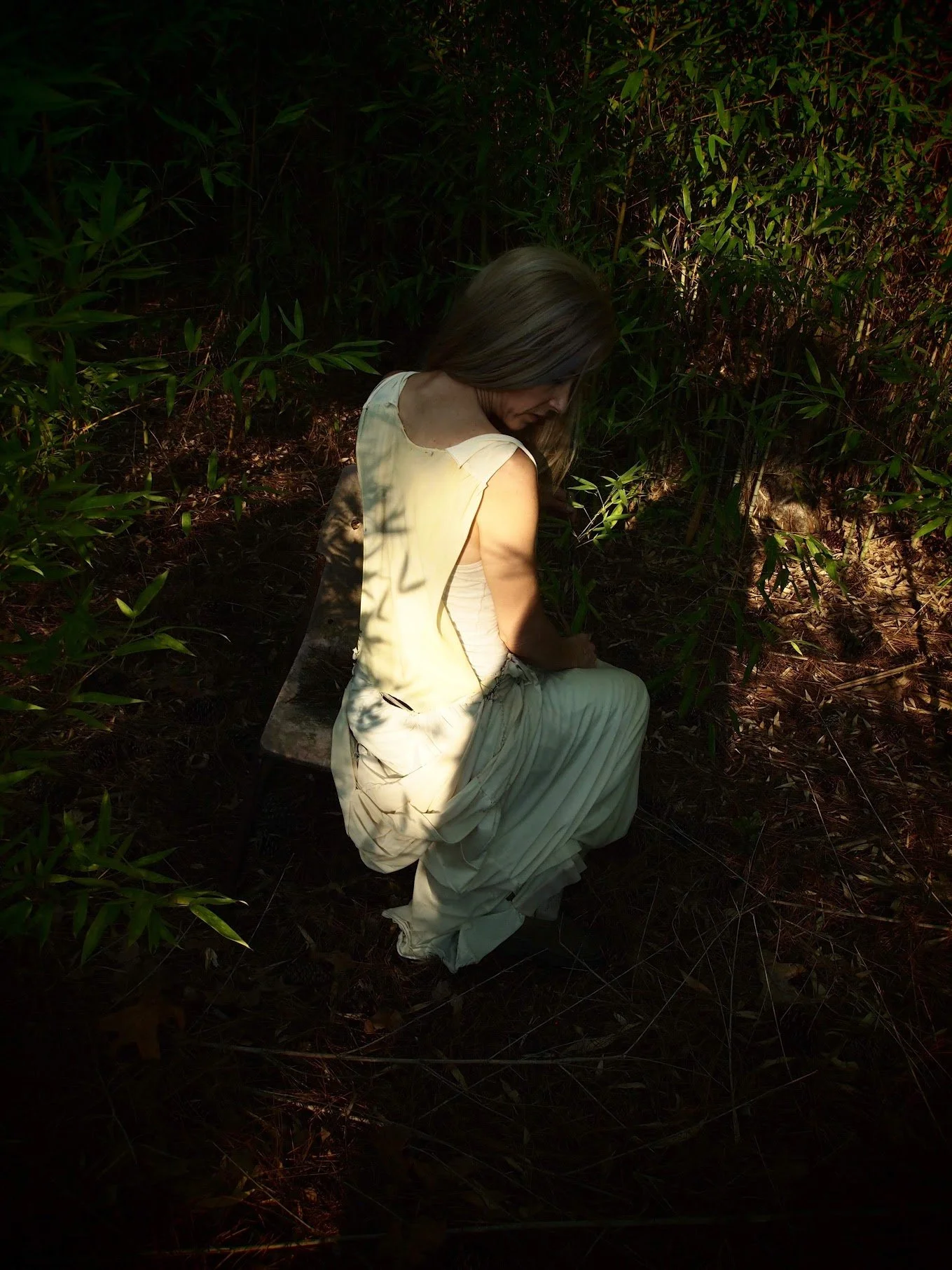
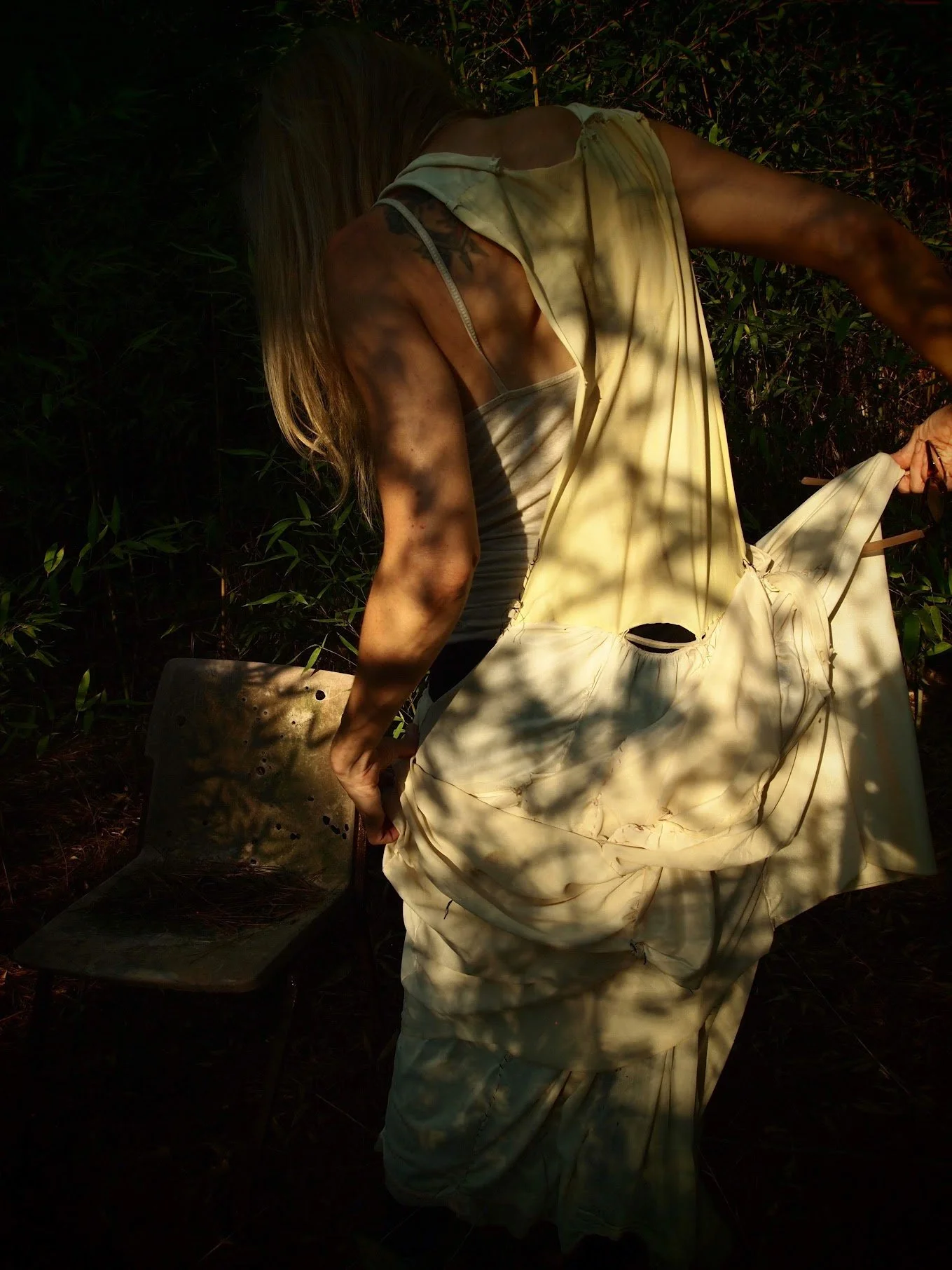
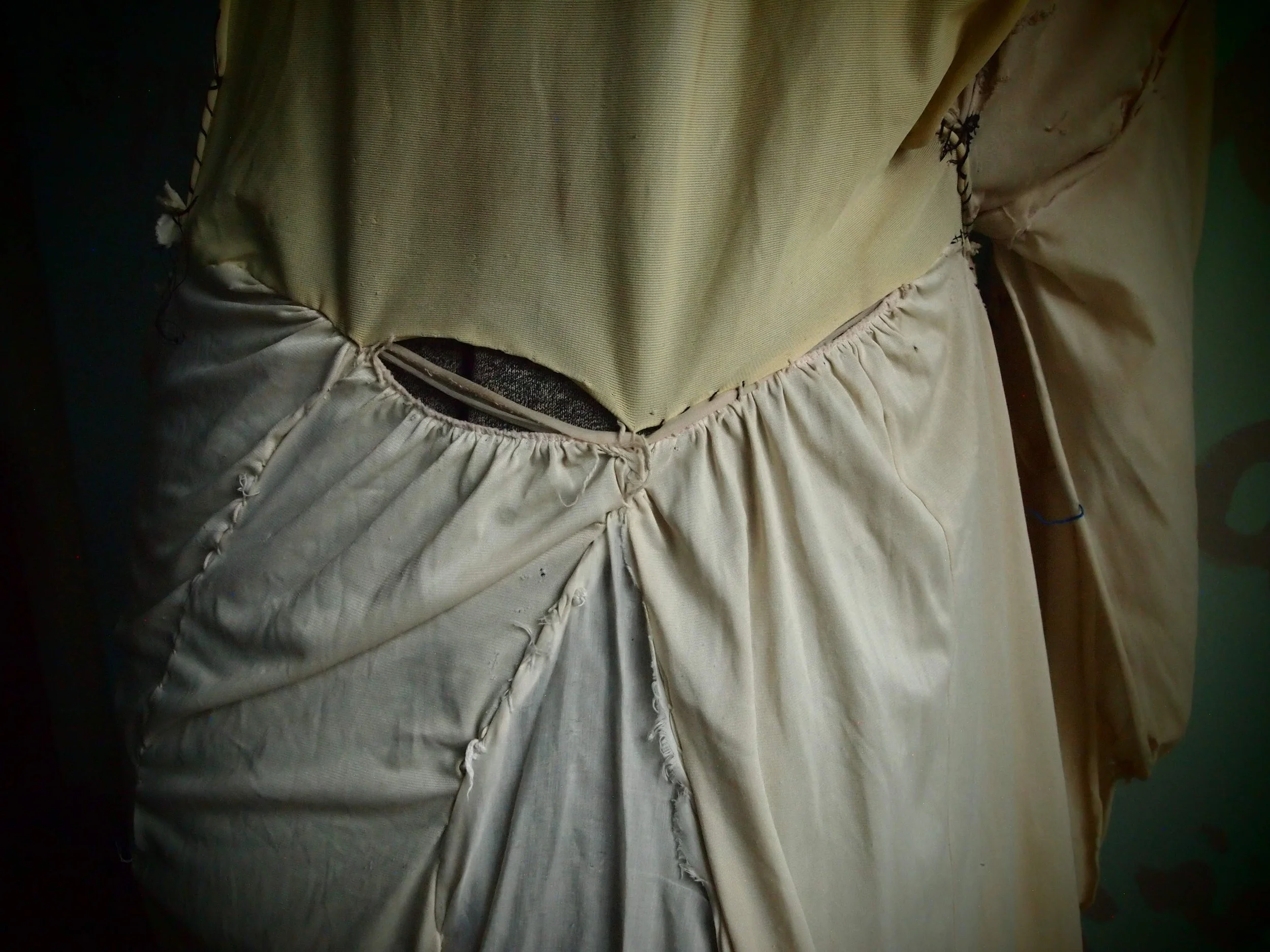
This vintage gown is a glamorous combination of decollete or plunging neckline, cap sleeves, a drop waist and a gathered skirt skirt. It reminds me a bit of a flapper style, but the back of the dress features an off-center "bustle" that appears to be the upside-down bodice of a different dress. The back also has a bateau (or boat) neck, with gathers below. There are so many asymmetrical panels of fabric and darts that make up this dress, it defies any traditional description.
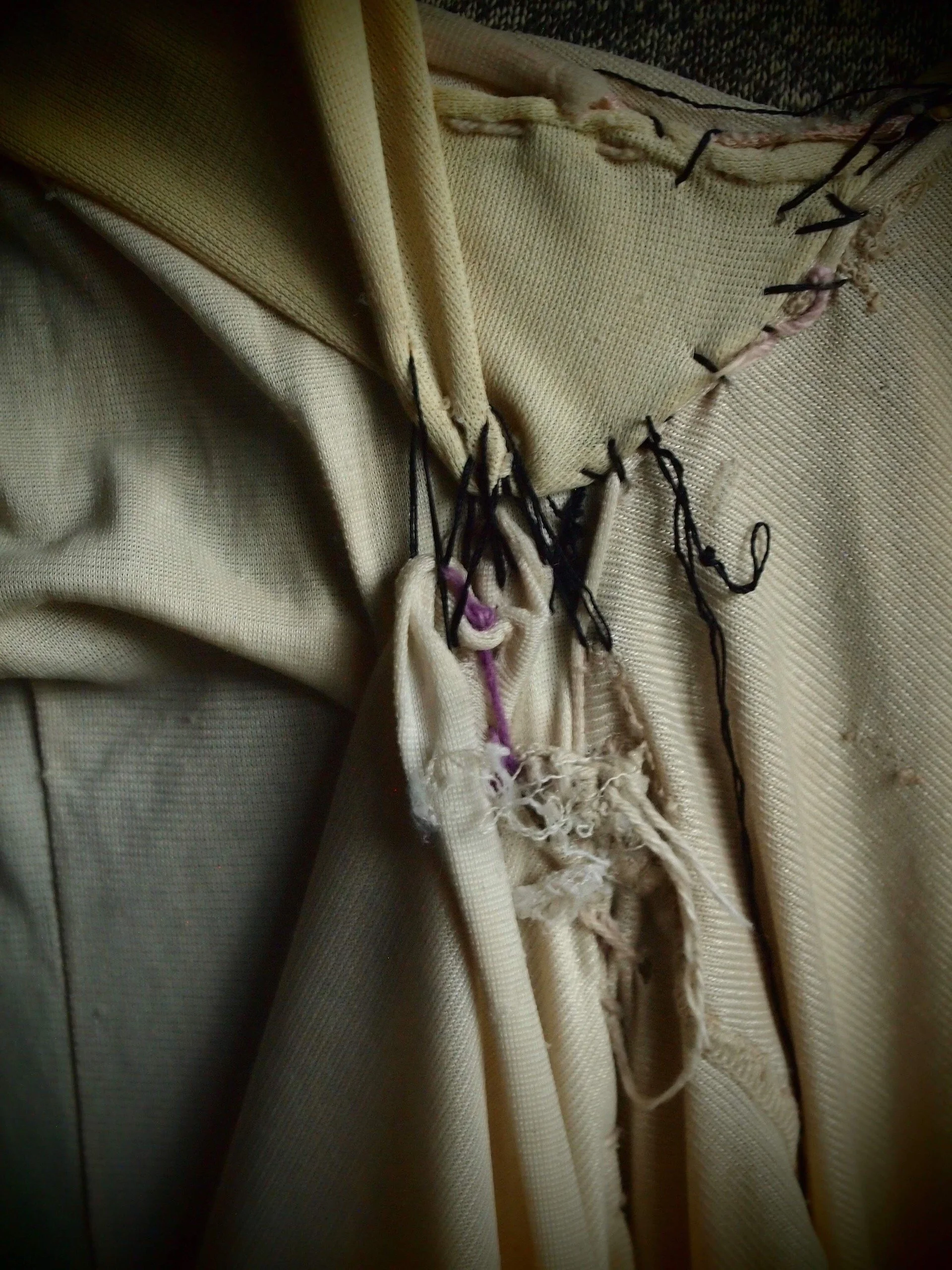
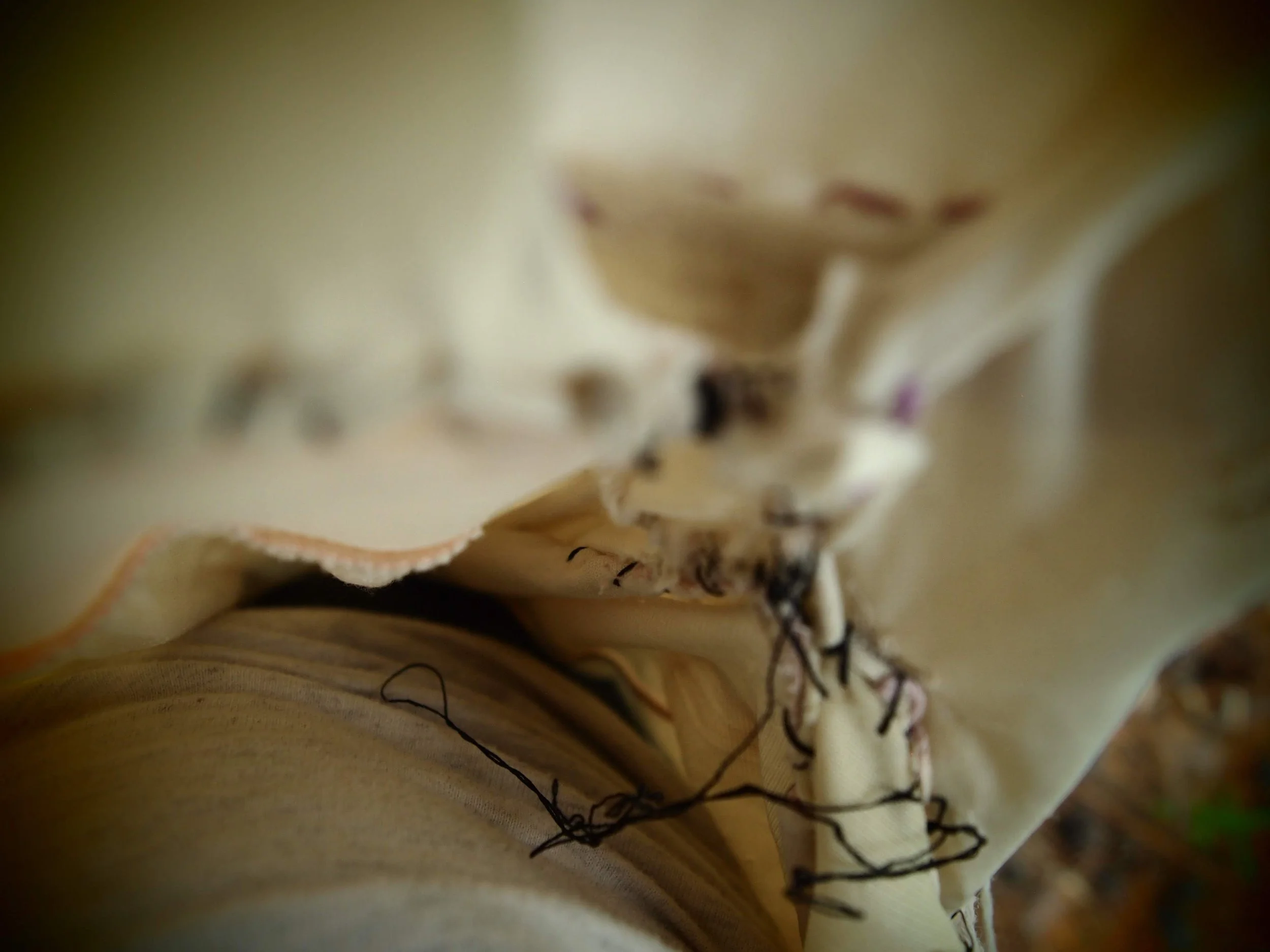
The cream nylon fabric is soft with a hint of shine. The wide band of the drop waist has an embroidered floral design, and there is some appliqued lace at the bustle beneath huge black Frankenstitches. Thick lavender and white thread also joins and embellishes many of the seams. Part of the hem is serged and part raw. The many stains and tatters are befitting to the Bride of Frankenstein.
But there's more. There is an inner slip of a dress attached at one hip to the outer dress. This slip is its own unique creation, with an apron-type design in the front, sheer pink panels at the waist and hem, and a high back in butter yellow. The gathered skirt has been enhanced with various gaps, gores, and stitchings. Like its partner, it is embellished and reinforced at many seams with tangles of black Frankenstitches.
If the dresses weren't attached, I would wear either alone. Together, despite my monstrous associations, the gown is as sweet as it is magnificent.
I'm awestruck at the creativity and resourcefulness that went into this design, and how necessity sparked Southern Gothic glamour.
I hope you think it's as exquisite as I do.
P.S.
This vintage dress-within-dress came from the home of an impressively hard-working farm family. I was lucky to come into a large collection of dresses that were made by hand or factory, heavily worn, mended, and re-made over a long span of time. They are photographed the way I found them, laundered but with none of my own embellishment or repair. They are too brilliant as-is.
These "rag-and-bone" dresses are works of textile art, artifacts of material culture. I share these pieces in full recognition of the hard lives that created them.
Rose Madder
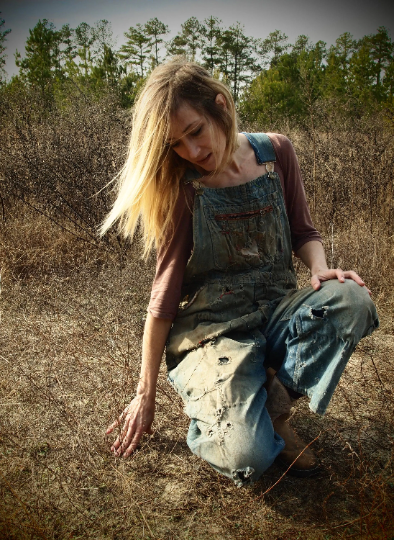
Bib Overalls
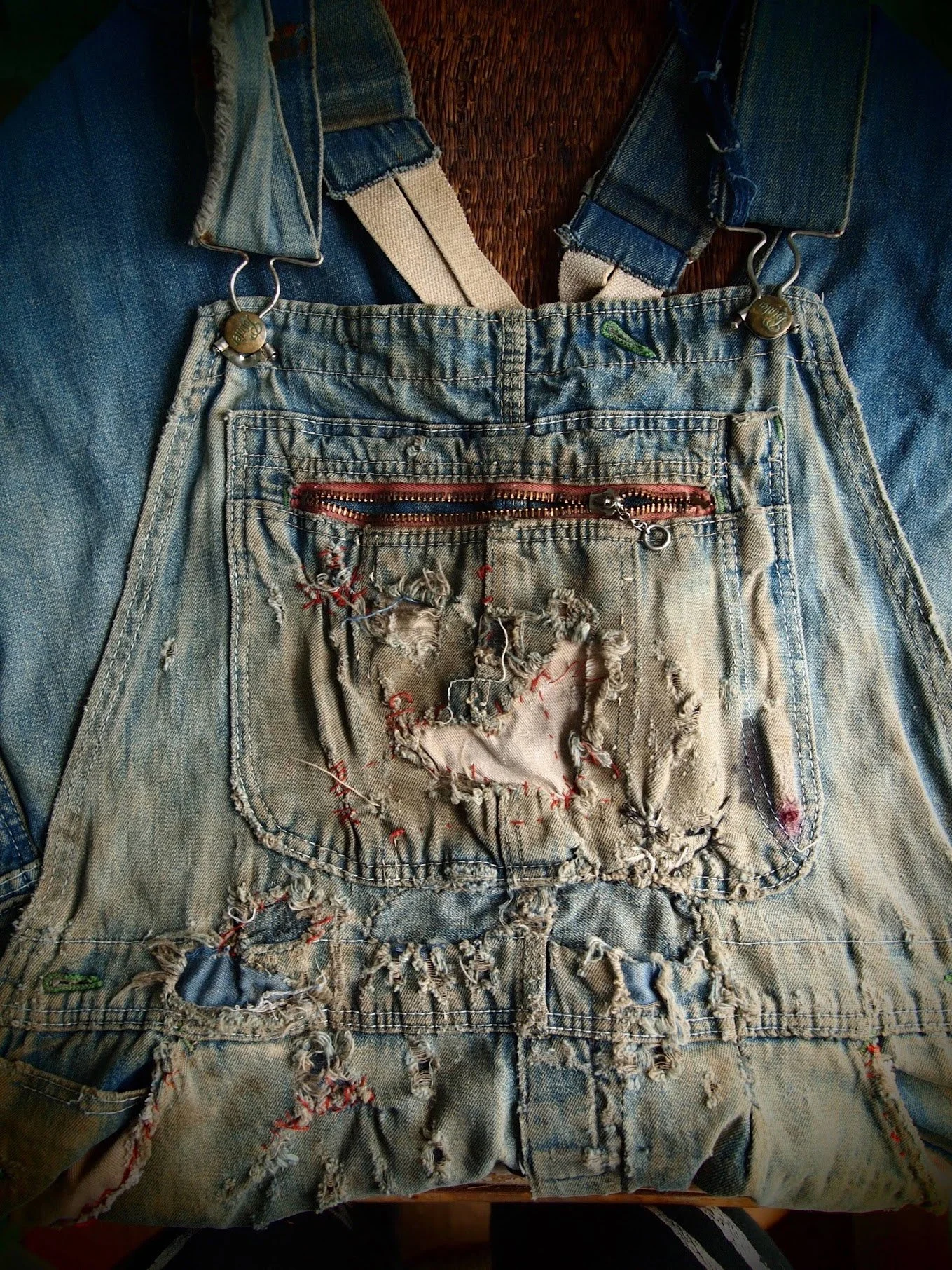
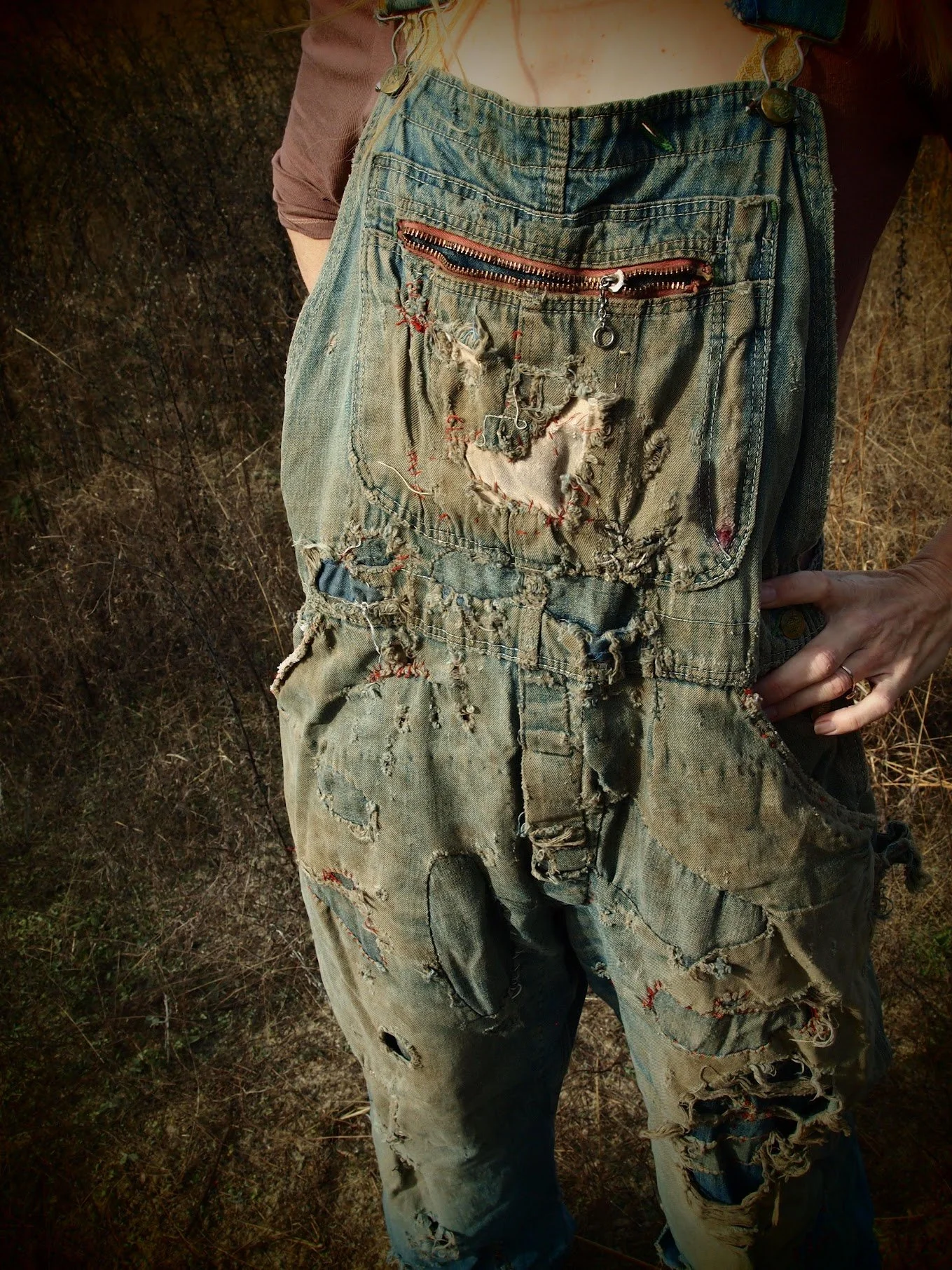
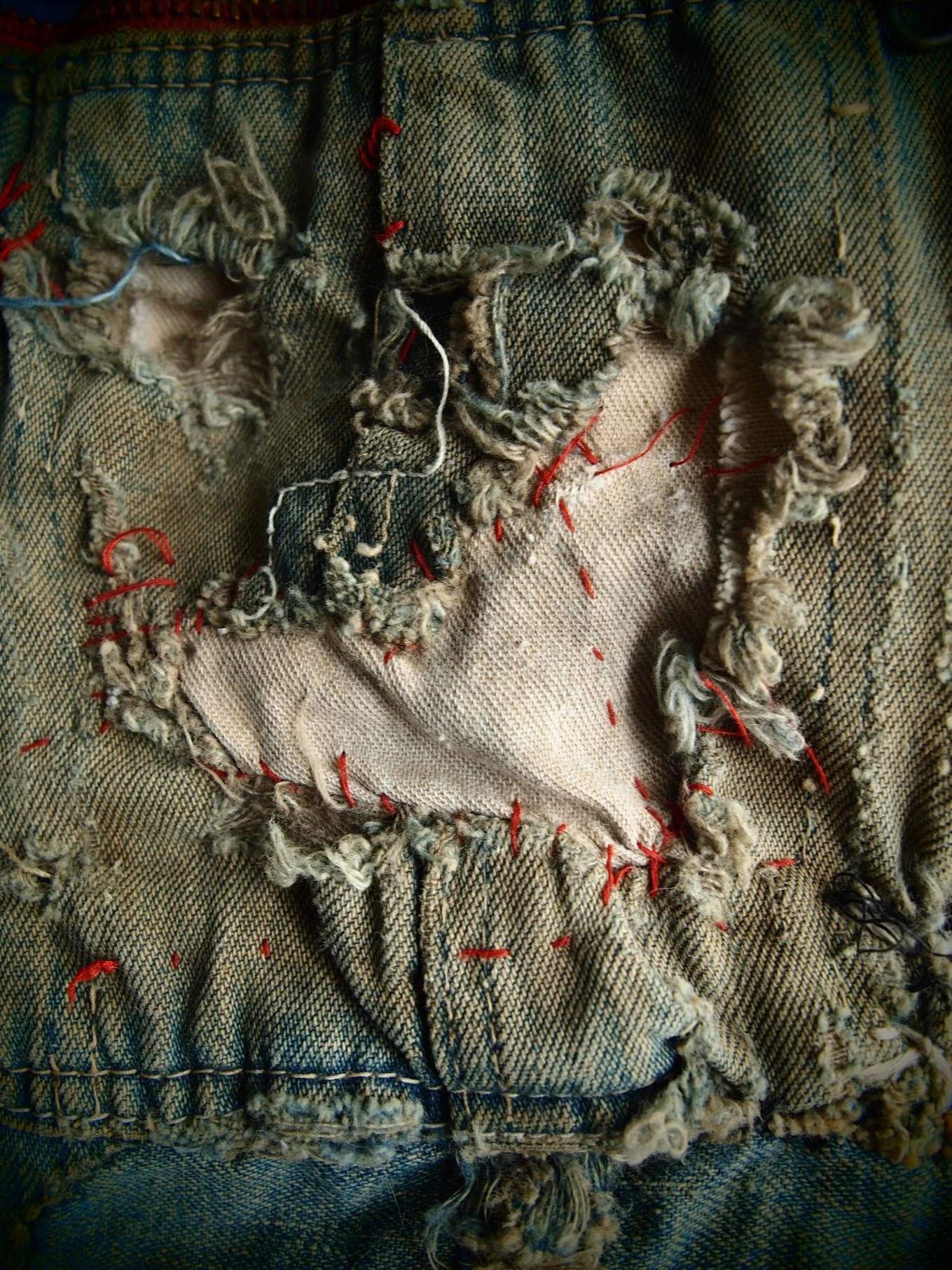
These vintage bib overalls came from an impressively hard-working farm family. They have been torn, patched and mended with different colors of denim and layer upon layer of stitches. They are photographed the way I found them, washed but with none of my own embellishment or repair. The handwork is already too brilliant. I'm dumbfounded at the labor and determination that went into keeping these overalls in service.
The Pointer brand is marked in green script on the buttons and printed in red script on the double canvas suspenders that connect the adjustable straps. They were made from 100% cotton heavy denim. They have a 5-in-one bib pocket on the chest and a working zipper with faded green tape. There's a working snap on the middle bib pocket with a green decorative insert. Any tag that may have been on the bib is gone. Both buckle loops and buttons are still attached and working. They are a low-back style with side buttons and button fly (held together with a safety pin for good measure!) The two side wing pockets can be worn either on the inside or outside! The two back patch pockets are large, and one has a significant hole with hand stitching. The a twisted side hammer loop is barely attached on one side. The leg hems are raw and frayed. There are holes all the way through in many places, despite many efforts to patch and mend. Some of the buttonholes are stitched with the original factory green thread. The hand stitching is in thick white, black and gray cotton thread.
X - 0 - X
This is a Southern version of boro, the hand stitched, patched and indigo dyed garments from Japan that are now appreciated and highly valued for their beauty and meaning as historical artifacts. These overalls are works of textile art.
These overalls came from a farmhouse where years ago, seven sons lived (which might account for the number of overalls I was able to procure!) I offer these pieces in full recognition of the hard lives that created them, human and animal alike. The stitching and wear are a map of this material culture. These are remnants of a lifeway in the U.S. South that is best not forgotten.
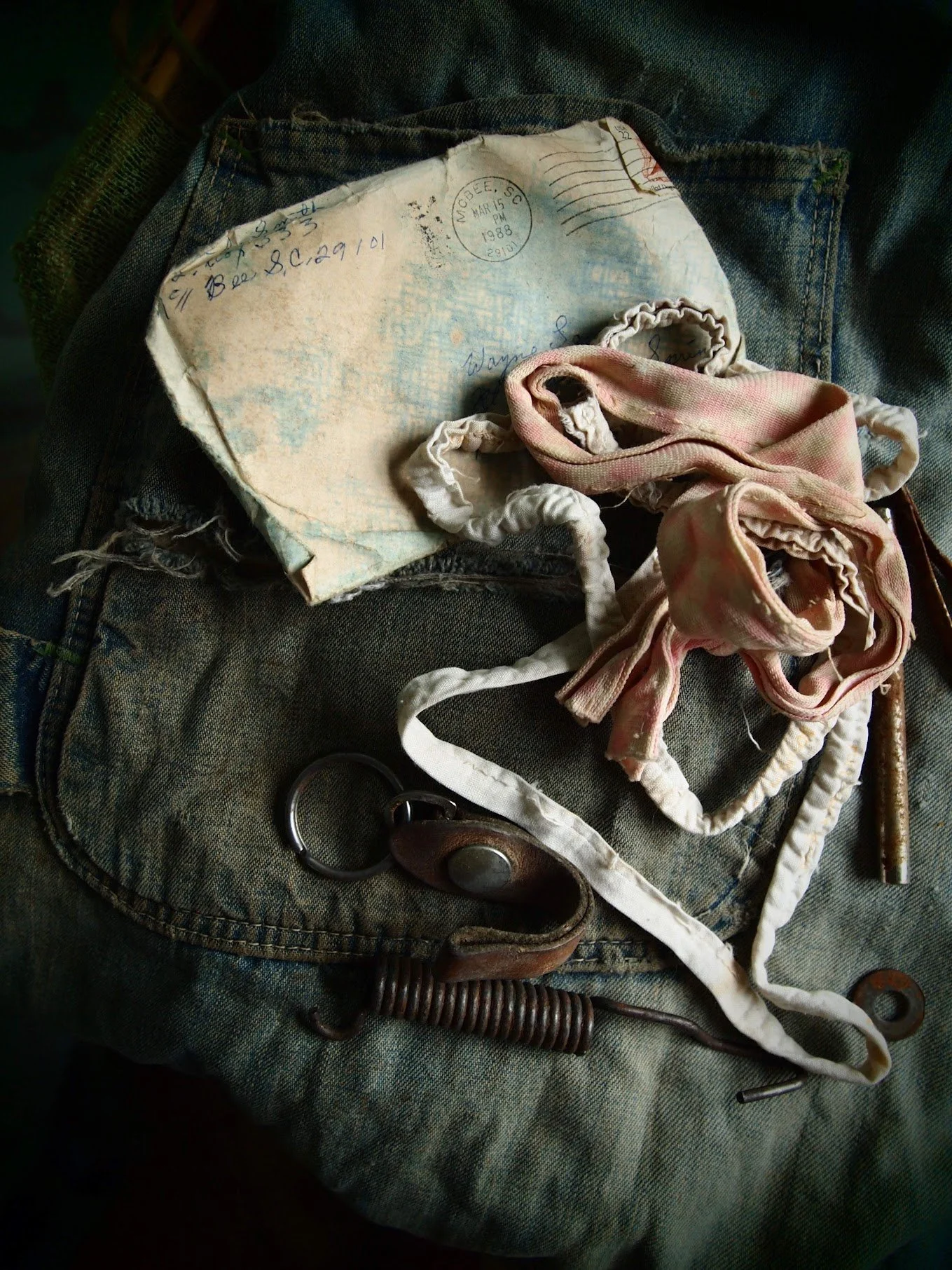
Then there is the contents of the pockets. Each pair of overalls came with loaded pockets – with every kind of doohickey from jackknives to matches (the Camel '92 Campaign), endless screws, wires, scraps of cloth, keys, buttons, an eyelash curler. The contents can help stitch together the story of these dungarees. I've included a sample photo here, but this is just representative of what they contained and not necessarily from this pair of overalls.
I have washed these overalls thoroughly but carefully, so the original staining and color variation of the denim is preserved. The once-heavy denim is soft with wear. Please look carefully at the photos, because it's impossible to detail all the "imperfections" of the beautifully threadbare cloth.