Dissertation Abstract (or, the story behind The Dresses of Drowning Creek)
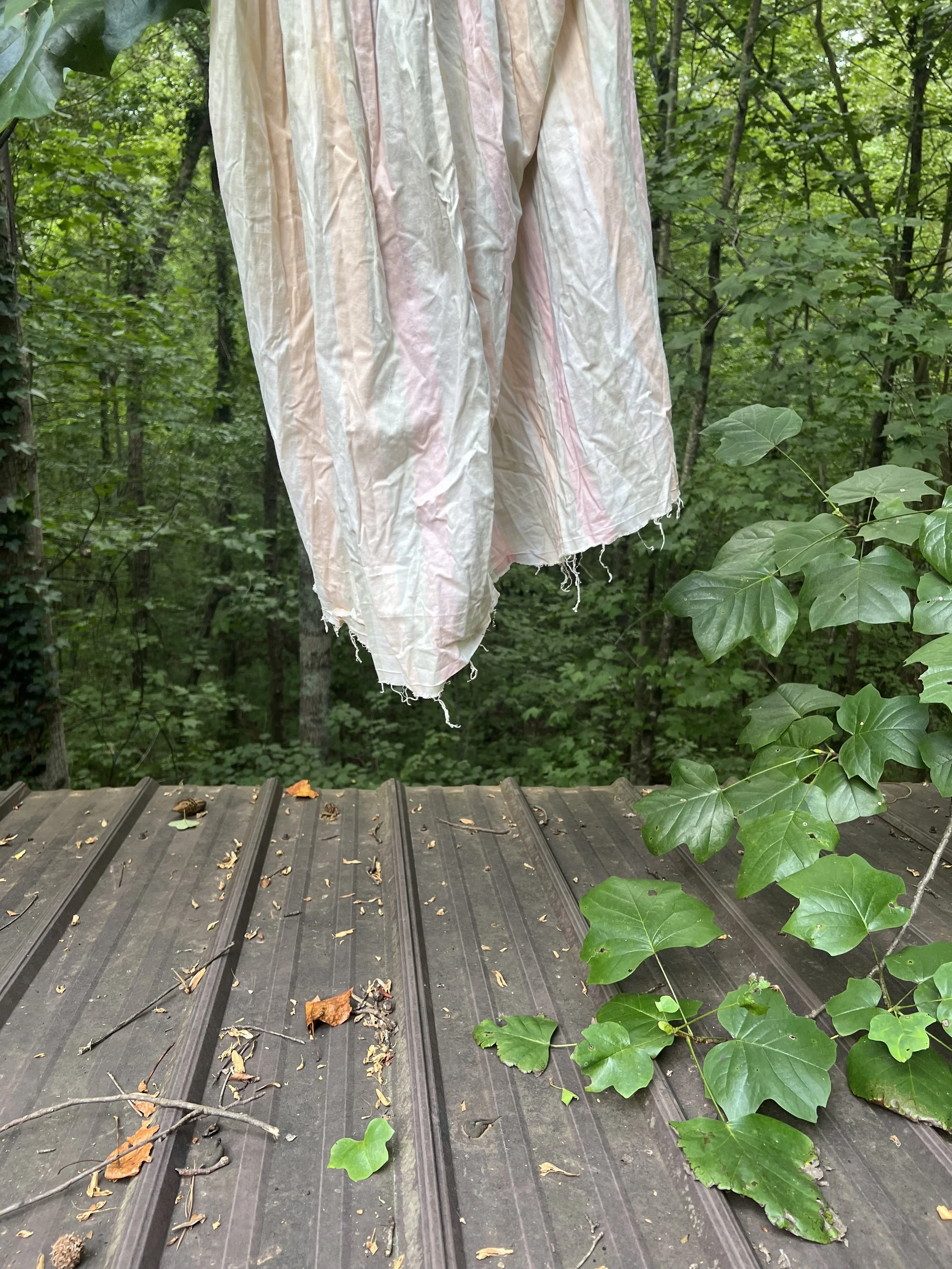
In 2015, I moved to a small farm in rural North Carolina. Behind my property stood an abandoned farmhouse where I discovered over one hundred and fifty handmade and heavily modified dresses, all carefully arranged as though someone had tried to preserve them, now succumbing to moisture, rodents, and time. I collected them over two years as the house deteriorated further.
These dresses were remarkable not only in quantity but in their aesthetics, with bold designs and almost defiant stitching. Mass-produced dresses had been taken apart and reassembled in outlandish ways. They refused proper dressmaking conventions while demonstrating sophisticated understanding of how bodies move, how fabrics behave, and how protection might work through cloth.
This novel emerges from my engagement with those objects. It is fabulation: a research method that works through fiction rather than documentation. The characters you’ll meet aren’t the real people who made and wore these dresses. Dru isn’t me. Rose is not the dressmaker whose name I learned through genealogical research. The community, the murders, the supernatural elements, all are invented.
But the dresses themselves guided this invention. Their material properties, their protective operations, their refusal to stay in assigned categories—these demanded certain approaches, certain genres, certain ways of following where they led. The blackwater creek, the quartz sand, the longleaf pine ecology of the North Carolina Sandhills are all real, and all shape how the dresses work in this story.
The chapters that supplement the novel in my dissertation explain the theoretical and methodological framework: why fabulation, why schizoanalysis, why Southern Gothic women’s fiction, mystery, and romance. But you don’t need that framework to read the story. You just need to follow where the dresses lead, stay with what troubles and persists, and let the materials do their work.
The Dresses of Drowning Creek began as research, but proceeded through fiction rather than analysis, through staying-with rather than explaining, through following flows rather than capturing them in stable interpretation. The novel is the method enacted, not described.